
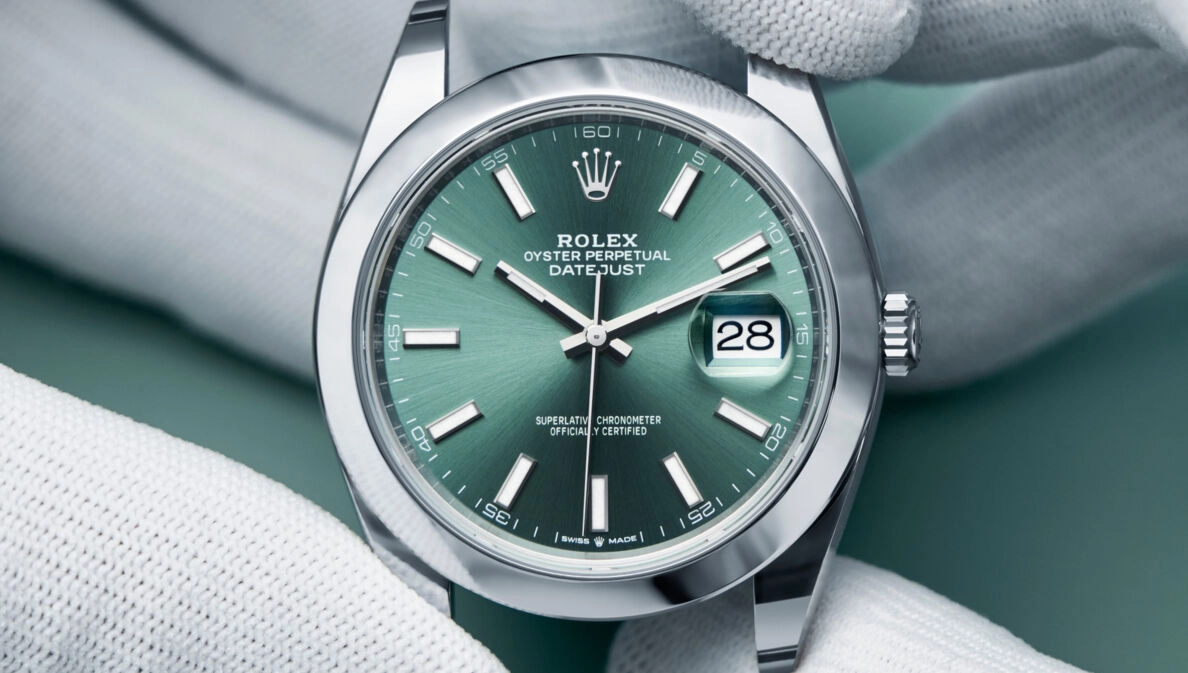
Rolex – timeless elegance, precision, and luxury.
For over a century, the Swiss watchmaker has shaped the history of the wristwatch like few others. Yet Rolex is far more than a status symbol. Its success is rooted in relentless innovation, technical excellence, and an extraordinary level of consistency.
A Visionary Beginning
The story begins in 1905, when Hans Wilsdorf, a Bavarian-born entrepreneur, founded a company in London to distribute Swiss watches. At the time, his belief was bold: the future belonged to the wristwatch. Wristwatches were widely regarded as inaccurate, fragile, and inferior to pocket watches.
Wilsdorf challenged that perception. He equipped his watches with high-quality Swiss movements and subjected them to rigorous testing. The results were groundbreaking. In 1910, a Rolex became the first wristwatch to receive a Swiss chronometer certificate. In 1914, it was awarded the British Class A precision certificate — a milestone previously reserved for marine chronometers.
In 1920, Wilsdorf relocated the company to Geneva. Precision, it became clear, was only the foundation of a much larger success story.
Master of Every Detail
What truly sets Rolex apart is its near-total control over its own production. From cases and bracelets to dials and the balance spring — the very heart of a mechanical movement — almost every component is manufactured in-house.
Rolex even produces its own metals. Instead of sourcing gold externally, the company operates its own foundry, where it creates proprietary alloys of yellow gold, white gold, and Everose gold at temperatures exceeding 1,200 degrees Celsius. For steel watches, Rolex exclusively uses 904L steel, chosen for its exceptional corrosion resistance and durability.
The same philosophy applies to ceramic. When suitable materials were not available on the market, Rolex developed its own ceramic bezels, fired in-house at temperatures of up to 1,500 degrees Celsius. The result is bezels of exceptional color stability and resistance, now iconic to models such as the GMT-Master II.
An Industrial Giant with a Manufactural Soul
Rolex is today the largest private employer in the Geneva region and the largest gold processor in Switzerland. Estimates suggest annual production of around 800,000 Rolex watches, complemented by approximately 200,000 watches from its sister brand Tudor. Annual revenue is believed to be in the region of five billion Swiss francs.
Behind the scenes, Rolex operates some of the most advanced watchmaking facilities in the world. Highly automated logistics systems move thousands of components daily. At the end of each shift, every unused part is returned to secure storage — not a single gear remains unattended.
Built for the Extremes
From the beginning, Rolex watches were designed for extreme conditions. In 1927, swimmer Mercedes Gleitze attempted to cross the English Channel wearing a Rolex Oyster. Although she failed to complete the swim, the watch emerged fully functional — a triumph that established Rolex as the inventor of the first truly waterproof wristwatch.
In 1953, Rolex accompanied the first successful ascent of Mount Everest. In 1960, a specially designed Rolex reached nearly 11,000 meters below sea level in the Mariana Trench, enduring pressures of over one ton per square centimeter. These feats cemented Rolex’s reputation for robustness and reliability.
The Heart of Rolex: Biel
The mechanical heart of Rolex beats in Biel, where the company produces its movements and the highly specialized Parachrom balance springs. Very few manufacturers worldwide possess the expertise to manufacture this critical component themselves.
Under vacuum conditions, niobium and zirconium are fused into an ultra-stable alloy, then drawn and processed into hair-thin springs. Precision on a microscopic scale — engineered for decades of reliability.
Brand, Myth, and Value
Rolex has long transcended watchmaking. It has become a cultural icon, worn by figures such as Winston Churchill, Pablo Picasso, Martin Luther King Jr., Elvis Presley, Andy Warhol, and many others.
At the same time, a Rolex is often considered “cash on the wrist.” Many models retain or increase their value, with rare vintage pieces achieving six-figure prices at auction. Watches that once sold for a few thousand francs now command extraordinary sums.
Consistency as a Strategy
Industry experts point to consistency as the defining success factor of Rolex. Designs evolve slowly, functions remain purposeful, and the brand’s visual identity is instantly recognizable. For more than half a century, Rolex has maintained its position as a global status symbol through disciplined communication and carefully chosen ambassadors.
Another key factor lies in ownership. Rolex is owned by the Hans Wilsdorf Foundation and remains independent of shareholders and stock markets. This structure enables long-term thinking, sustained investment, and unwavering focus on quality.
A Legend with a Future
Rolex is a high-efficiency industrial powerhouse, a watchmaking manufactory, and one of the most respected brands in the world. In global reputation rankings, Rolex consistently places among the top ten companies across all industries.
Or, as one industry insider once remarked:
“If Rolex decided to make a submarine fly, it would work.”